Following the translated table of contents of my Japanese book, Cinema Soundscapes: Cultures of Film and Sound in Prewar Tokyo, Shunjusha, 2024.
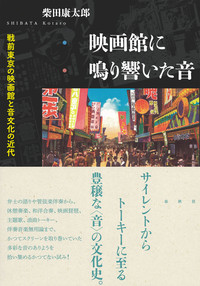
Contents
Introduction
- The Movie Theater as a Space for Experiencing Western Music: Cultural Apparatuses of Western Music Reception
- A Global History of Sonic Practices in Film Exhibition
- The Sound Culture of Movie Theaters in Prewar Tokyo
- Structure of this Book
Part I: The Silent Era 1 – The Development of Western Film Exhibition and Western Music Accompaniment
Chapter 1: The Sounds that Resounded in Early Movie Theaters: The Development of Film Exhibition and the Diversification of Sonic Practices
- The Dawn of Film Exhibition: Early Film Screenings and Two Approaches to Sonic Practice
- The Birth of the Movie Theater and Sonic Practices in Narrative Cinema
- The Proliferation of Movie Theaters and the Diversification of Sonic Practices
Chapter 2: How Japanese Audiences Heard Western Music: Intermission Music and Film Accompaniment in Foreign-Film Theaters
- Foreign-Film Theaters and the Expansion of Orchestral Ensembles
- Foreign-Film Fans’ Enthusiasm for "Western Music" and the Modernization of Cinema Culture
- How Foreign-Film Fans Listened to Accompaniment Music
Chapter 3: Benshi and Musicians in the Dark: The Intersection of Global Accompaniment Music and Local Film Narration
- Film Narration and Film Accompaniment in "Photoplay" Discourse: The Formation of a "Domestic Standard" for Foreign-Film Exhibition
- The Clash Between Global Musical Practices and Local Film Narration
- The "Modernization" of Film Narration and Film Accompaniment
- Increasing Complexity in Cue Sheet Design for Film Accompaniment: The Further Influx of Music Cue Sheets
Part II: The Silent Era 2 – The Exhibition of Japanese Films and the Transformation of Sonic Practices
Chapter 4: How Japanese Films Came to Be Accompanied by Western Music: The Pure Film Movement and the Practices of Shochiku Kinema
- Sonic Practices Modeled on Theatrical Performance: Voice-Imitating Benshi and Hayashi Percussion/Instruments
- The Reform of Japanese Cinema and Western Music Accompaniment
- Shochiku-Managed Theaters and Western Music: The Foreign-Film Exhibition Model and Theater Reform
Chapter 5: Nobuhiro Matsudaira’s Film Music Composition: The Popularity of Kouta Films and the Nikkatsu Composition Department
- The Birth of the Nikkatsu Composition Department and Nobuhiro Matsudaira
- The Nikkatsu Composition Department and the Kouta (Short Song) Film Craze
- Nobuhiro Matsudaira’s Theory of Film Accompaniment: The Anti-Attraction Orientation of the Pure Film Movement
- Nobuhiro Matsudaira’s Photoplay Accompaniment at the Asakusa Sanyukan Theater
Chapter 6: The Development of Eiga Biwa (Film Biwa) in Japanese Cinema: The Japan Film Biwa Association and Its Context
- The Pure Film Movement and the Development of Eiga Biwa in Tokyo
- Kōryō Kimizuka and the Japan Film Biwa Association
- The Practice of Eiga Biwa as Seen in Film Biwa Scripts
Chapter 7: The Eclecticism of Period Film (Jidaigeki) Accompaniment: Japanese-Western Ensembles, Music Selection, and Newly Composed Scores
- Exhibition Practices of Nikkatsu Period Films and the Introduction of Eclectic Japanese-Western Ensembles: Practices at the Asakusa Fujikan Theater
- Eclectic Music Selection in Nikkatsu Period Films: Music Selection Practices at the Kanda Nikkatsukan Theater
- Nobuhiro Matsudaira’s Accompaniment Scores for Period Films: The Reality of Eclectic Accompaniment Scores
- Intermission Performances in Japanese Film Theaters during the 1920s
Part III: The Talkie Era – Talkie Films and the Reorganization of Sonic Practices
Chapter 8: Movie Theaters and Recorded Sound During the Transition to Talkies: The Exhibition of Talkies as a Music Medium
- Early Talkies and Sonic Practices of the Silent Era
- Music Culture in Japanese Film Theaters During the Transition to Talkies
- The Standardization of Foreign Talkie Screenings and the "Rejection of Accompaniment Music" Discourse
- The Movie Theater as a Space for Auditioning Phonograph Records
Chapter 9: Japanese Talkies and the Re-Standardization of Nondigetic Music: Directors, Composers, and Audiences
- The Transition to Talkies as Seen in Shochiku "Sound Version" Films
- The Re-Standardization of Nondiegetic Music in Talkie Production: Film Directors and Sound Direction
- Music Departments in Talkie Studios and the Re-Standardization of Film Accompaniment
- Developments and Challenges in the Westernization of Film Accompaniment
Chapter 10: The Reorganization of Narrative in the Transition to Talkies: Reconsidering "Kaisetsu-ban (Benshi narration version) Talkies" and "Rōkyoku Talkies"
- Narrated Talkies (Kaisetsu-ban Toki) and the Regionality of Sonic Practices
- The Audiovisual Style of Rōkyoku (Narrative Chanting) Talkies and Their Reception
- Preston Sturges’s "Narratage" and the Diversity of Its Reception
- "New-Style Narratage" and Rōkyoku Performers within the Diegetic World
Chapter 11: Realism in Japanese Cinema and the "Rejection of Nondiegetic Music" Discourse: Shirō Fukai and his Contemporaries
- The Discourse on "Realism" in the Japanese Film Industry
- Film Realism Theory and the Arguments Against Accompaniment Music (Nondiegetic Music)
- Shirō Fukai’s Arguments Against Accompaniment Music in Realist Film
- Theater Speakers as Propaganda Apparatuses
Conclusion
- The Global History of Film Sound and Tokyo Movie Theaters
- A Genealogy of Issues Surrounding the Standardization of Film Sound
Notes
Afterword
Bibliography
Index
